Costa Rica information Costa Rica information

COSTA RICA INFORMATION

HISTORY - GEOGRAPHY - CLIMATE - MARRIED

Contact us, and we will organise your trip of a lifetime.


FOR SPECIFIC TRAVEL INFORMATION TO COSTA RICA, PLEASE VISIT OUR WEB SITES:

Costa Rica Hotels

Costa Rica Vacations

Costa Rica Tour

Costa Rica Shore Excursions

Costa Rica Puntarenas

Costa Rica Limon

Gay Costa Rica

Scuba Diving Costa Rica

Costa Rica Domestic Flights

Costa Rica Fishing

HISTORY:

Costa Rica was inhabited by an estimated 25,000 Indians when Columbus explored it in 1502. Few of the Indians survived the Spanish conquest, which began in 1563. The region grew slowly and was administered as a Spanish province. Costa Rica achieved independence in 1821 but was absorbed for two years by Agustín de Iturbide in his Mexican empire. It became a republic in 1848. Except for the military dictatorship of Tomás Guardia from 1870 to 1882, Costa Rica has enjoyed one of the most democratic governments in Latin America. Information on Costa Rica

In the 1970s rising oil prices, falling international commodity prices, and inflation hurt the economy. Efforts have since been made to reduce reliance on coffee, banana, and beef exports. Tourism is now a major business. Rodrigo Carazo Odio became president in 1978. Oscar Arias Sanchez, who became president in 1986, was awarded the Nobel Peace Prize in 1987 for his role in negotiating settlements to both the Nicaraguan and the Salvadoran civil wars. Information on Costa Rica

José Maria Figueres Olsen of the National Liberation Party became president in 1994. He opposed economic suggestions made by the International Monetary Fund, instead favoring greater government intervention in the economy. The World Bank subsequently withheld $100 million of financing. In 2002, Abel Pacheco of the Social Christian Unity Party became president. I

GEOGRAPHY:

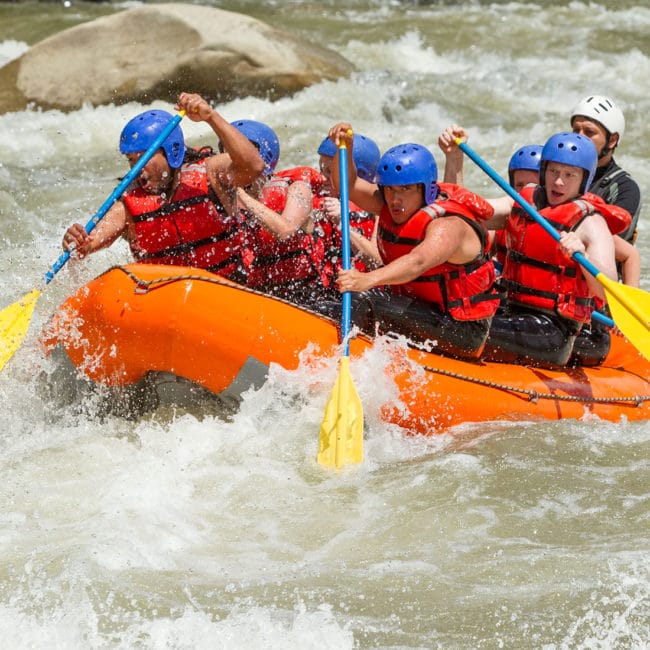
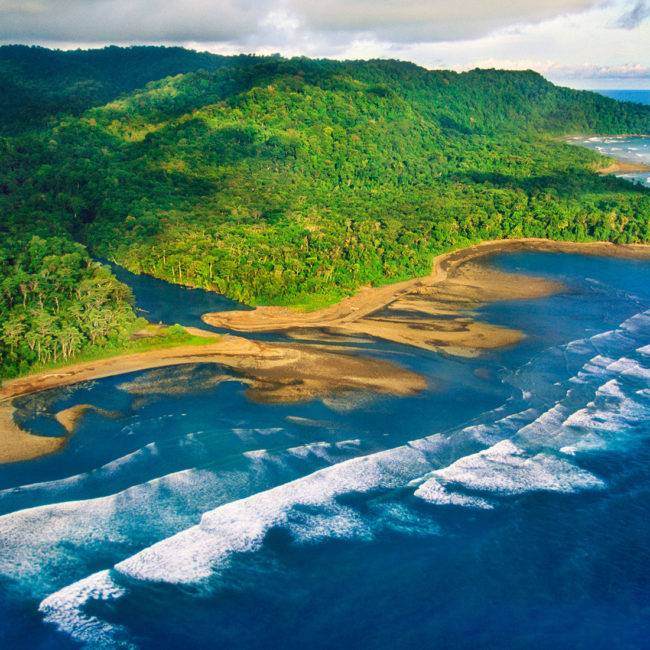
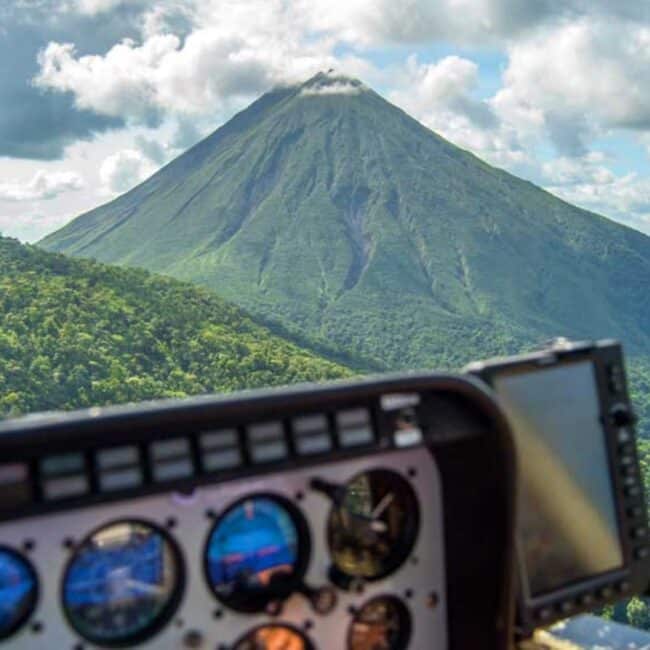
Rugged highlands are found throughout most of the country, they range from approximately 1,000 to 2,000 meters (3,000 to 6,000 feet above sea level). The Cordillera de Guanacaste, Cordillera Central, and Cordillera de Talamanca are the principal mountain ranges extending the length of the country. There are several active volcanoes (Volcán Arenal, Volcán Irazú, Volcán Rincón de la Vieja and Volcán Turrialba) and the country´s highest mountain (Cerro Chirripó) which reaches a height of 3,819 m/12,530 ft. The country has a relatively long coastline in both the Atlantic and Pacific oceans, as well as a number of rivers and streams that attract expert kayakers and rafters.

CLIMATE:

Costa Rica´s year round climate is pleasant with naturally occurring breezes cooling down most of the coastal areas. Temperatures in the highlands and the mountains are warm by day and brisk at night giving an "eternal spring" feeling. The average annual temperatures range from 31.7°C (89°F) on the coast to 16.7°C (62°F) inland. The rainy, or green, season lasts from May to December with noticeably drier days during the rest of the year.

COSTA RICA AT A GLANCE:

National Name: República de Costa Rica.

President: Abel Pacheco de la Espriella(2002-2006)

Area: 19,730 sq mi (51,100 sq km)

Population (2001 est.): 3,773,057 (average annual rate of natural increase: 1.6%); birth rate: 20.3/1000; infant mortality rate: 11.2/1000; density per sq mi: 191

Capital and largest city (1994 est.): San José, 315,909

Monetary Unit: Colón

Language: Spanish

Ethnicity/race: white (including mestizo) 96%, black 2%, Indian 1%, Chinese 1%

Religion: Roman Catholic 95%

Literacy rate: 93% (1990)

Economic summary: GDP/PPP (1999 est.): $26 billion; per capita $7,100. Real growth rate: 7%. Inflation: 10.8%. Unemployment: 5.6% (1998 est.); 7.5% underemployment. Arable land: 6%. Agriculture: coffee, bananas, sugar, corn, rice, beans, potatoes; beef; timber. Labor force: 1.377 million (1998); agriculture, 20%; industry, 22%; services, 58%. Industries: microprocessors, food processing, textiles and clothing, construction materials, fertilizer, plastic products. Natural resources: hydropower. Exports: $6.4 billion (f.o.b., 1999 est.): coffee, bananas, sugar; textiles, electronic components, electricity. Imports: $6.5 billion (c.i.f., 1999 est.): raw materials, consumer goods, capital equipment, petroleum, electricity. Major trading partners: U.S., EU, Central America, Japan, Mexico, Venezuela. Information on Costa Rica

Communications: Telephones: main lines in use: 451,000 (525,700 main lines installed) (yearend 1996); mobile cellular: 46,500 (December 1996). Radio broadcast stations: AM 50, FM 43, shortwave 19 (1998). Radios: 980,000 (1997). Television broadcast stations: 6 (plus 11 repeaters) (1997). Televisions: 525,000 (1997). Internet Service Providers (ISPs): 2 (1999).

Transportation: Railways: total: 950 km. Highways: total: 37,273 km; paved: 7,827 km; unpaved: 29,446 km (1998 est.). Waterways: about 730 km, seasonally navigable. Ports and harbors: Caldera, Golfito, Moin, Puerto Limon, Puerto Quepos, Puntarenas. Airports: 155 (1999 est.).

International disputes: none.

HOW TO GET MARRIED IN COSTA RICA:

If you are NOT a Costa Rican citizen, you will be required the following documents:

A passport valid for at least six months
A certified copy of your birth certificate (1)
A certified copy of your police record (2)
An Affidavit of Single Status (3)

If you are marrying a Costa Rican citizen, your future spouse will require the following documents:

A Costa Rican identity card ("Cédula de Identidad")
A Certificate of Single Status issued by the Civil Registry ("Certificado de Soltería del Registro Civil")
If you have been married before, you will require these additional documents:

A certified copy of the divorce decree (1) or
A certified copy of your previous spouse's death (1)
Married in Costa Rica
Note:

If your future wife has been divorced or is a widow, she can remarry only three hundred (300) days after the official issuance date of her divorce decree or her former husband's death certificate. She can waive this requirement if she proves that she is not pregnant before your marriage ceremony.

Your future wife must take a pregnancy test administered by the Supreme Court of Costa Rica at the Forensic Medicine Office (Medicatura Forense de la Corte Suprema de Justicia) in San Joaquin de Flores in Heredia, Costa Rica. Their telephone number is 506-295-3000. If her pregnancy test is negative, she can marry immediately.

You will need two witnesses to your wedding - non-relatives preferred. They must have the following documents:

For non-Costa Rican citizens:

A passport valid for at least six months

For Costa Rican citizens:

A Costa Rican Identity card ("Cédula de Identidad")

Once you have the above documents, contact a lawyer, judge, or a priest in Costa Rica to perform the marriage ceremony.

(1) This document must be authenticated by a Consulate of Costa Rica prior to coming to Costa Rica.

(2) This document must be issued no more than six month prior to your marriage ceremony and must be authenticated by a Consulate of Costa Rica prior to coming to Costa Rica.

(3) This document must be must be authenticated by a Consulate of Costa Rica prior to coming to Costa Rica. Or, you may visit the U.S. Embassy in Costa Rica at their Consular Section to issue the Affidavit of Single Status before a U.S. Consular Officer.

Validity of Marriages

Marriages legally performed and valid in Costa Rica are also legally valid in other countries.

Your marriage certificate will be issued by the Civil Registry ("Registro Civil") between 4 and 7 weeks after your marriage ceremony. Your marriage will be legally recognized in the U.S. when you or your lawyer who performed the ceremony submits your marriage certificate with the appropriate certifications to the U.S. Embassy in Costa Rica.

To be legally recognized in the U.S., your marriage certificate must be:

Translated into English by an Official Translator accredited by the Ministry of Foreign Relations ("Ministerio de Relaciones Exteriores")
Authenticated by the Ministry of Foreign Relations ("Ministerio de Relaciones Exteriores")
Notarized by a Public Notary

Certified and signed by the U.S. Embassy's Consular Section

Featured services:
For Further Information Contact:
Mario Leon. CEO.

Greenway Nature Tours.San Jose, Costa Rica. Central America.
USA & CANADA Toll Free: Toll Free

OFFICE HOURS: Monday- Friday: 9:00AM to 5:00PM. Sat: 9:00 AM – 2:00PM (Local Time). Sun: Closed.
P.O.Box 3153-1000 SJ. Costa Rica.
Email: info@greenwaytours.com. Visit our main web site at: http://www.greenwaytours.com
SITE NAVIGATION
TOURS BY REGION
DESTINATIONS
VACATION SELECTION
costa rica ecotourism
Tell us how do you
want your Package

costa rica ecotourism